
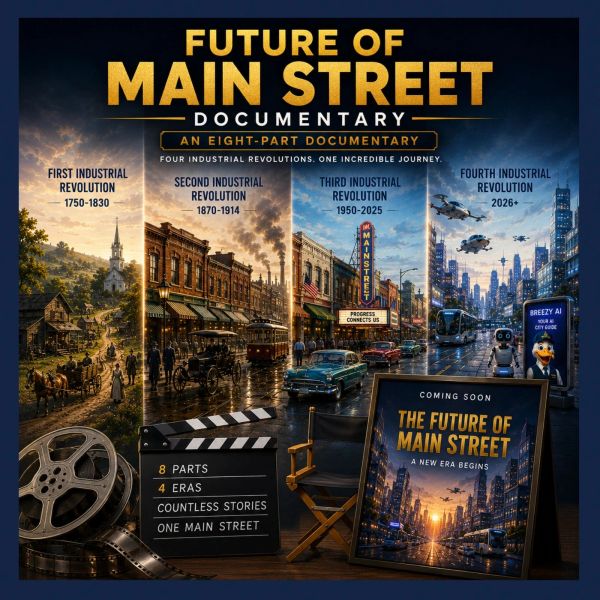
FUTURE OF MAIN STREET
The Future of Main Street Documentary tells the story of how innovation transformed America's Main Streets. The series begins with Main Street Foundations. The first two episodes explore the innovations of the First Industrial Revolution that established the nation's earliest Main Streets.
The story continues through The Rise of Main Street and Suburbia. Discover how the Second and Third Industrial Revolutions changed local businesses, transportation, communication, and everyday life. These innovations built the communities we know today.
The final two episodes look ahead to The Future of Main Street. Explore how communities can rethink what’s possible with artificial intelligence, robotics, and intelligent technologies. The Future of Main Street has not been written. The next chapter is just beginning.
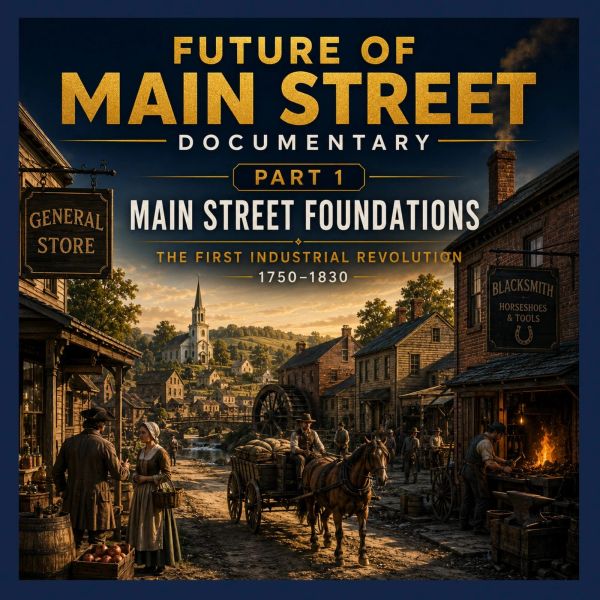
1. MAIN STREET FOUNDATIONS
Main Street Foundations explores how the First Industrial Revolution (1750–1830) established the earliest foundations of America's Main Streets. Small communities grew around general stores, inns, taverns, and local markets. These businesses became gathering places where commerce, relationships, and community life developed
Innovations such as improved roads, canals, water-powered mills, early manufacturing, and better agricultural equipment strengthened local economies. These advancements made it easier to transport goods, support growing populations, and encourage entrepreneurship.
This episode examines how practical innovation transformed small settlements into thriving commercial centers. Although these early technologies were simple by today's standards, they established the framework for every generation of Main Street that followed.
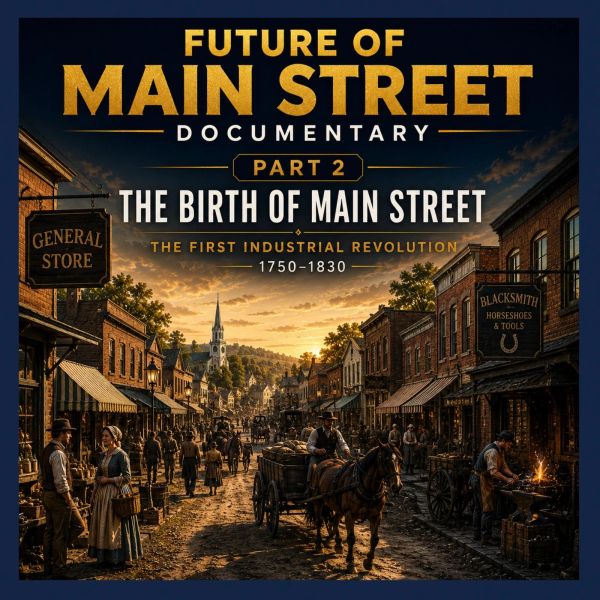
2. THE BIRTH OF MAIN STREET USA
The Birth of Main Street USA explores how America's earliest commercial districts emerged during the First Industrial Revolution. Emerging businesses clustered along central streets where residents could shop, work, trade, and gather. General stores, inns, taverns, and local merchants became the heart of everyday community life.
Improved roads, canals, and transportation networks made it easier to move goods between growing communities. Entrepreneurs opened new businesses to meet increasing demand, while local merchants introduced products that strengthened regional economies.
This episode examines how these early business districts gave rise to the Main Street model. More than a collection of buildings, Main Street became the center of commerce, communication, and community leadership. The ideas established during this period created a lasting foundation that continues to shape local business districts today.
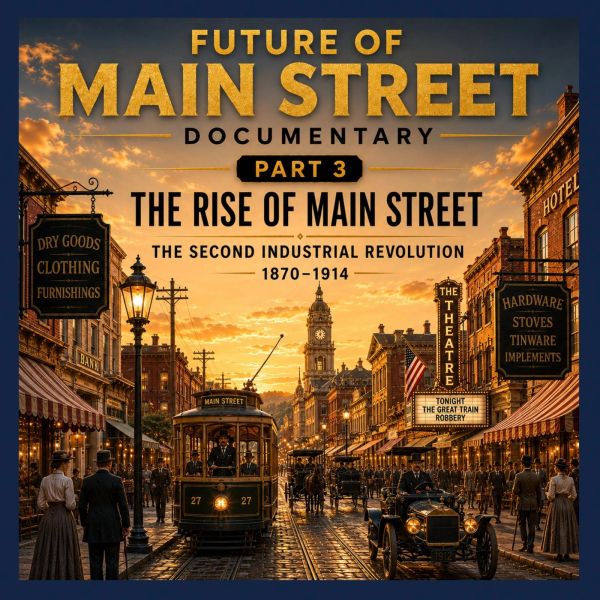
3. THE RISE OF MAIN STREET
The Rise of Main Street explores how the Second Industrial Revolution (1870–1914) transformed local business districts into thriving centers of commerce. Railroads, electricity, steel, telephones, and modern manufacturing reshaped the way communities lived and worked.
New technologies improved both business operations and daily life. Electric lighting extended business hours, cash registers simplified transactions, refrigerated railcars expanded food distribution, and mass production made products more affordable. These innovations attracted investment throughout local communities.
This episode examines how innovation reshaped Main Street into the economic heart of America. The infrastructure, businesses, and civic leadership established during this era laid the foundation for generations of economic growth.
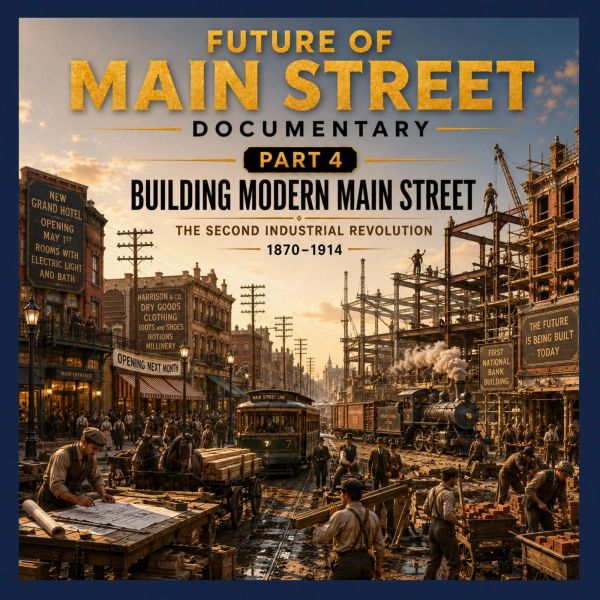
4. BUILDING MAIN STREET
Building Modern Main Street explores how the Second Industrial Revolution transformed communities between 1870 and 1914. Railroads delivered steel, lumber, and machinery that supported new construction. Brick buildings, hotels, banks, department stores, and electric streetlights created vibrant business districts.
Electricity extended shopping hours, telephones connected merchants with suppliers, and streetcars improved mobility. Local leaders, architects, builders, and entrepreneurs worked together to expand opportunity.
Their enduring presence demonstrates how bold investment, practical innovation, and strong community leadership shaped Main Street. These achievements strengthened local businesses, created lasting economic growth, and inspired future generations. Every great Main Street began with people willing to build something greater than themselves.
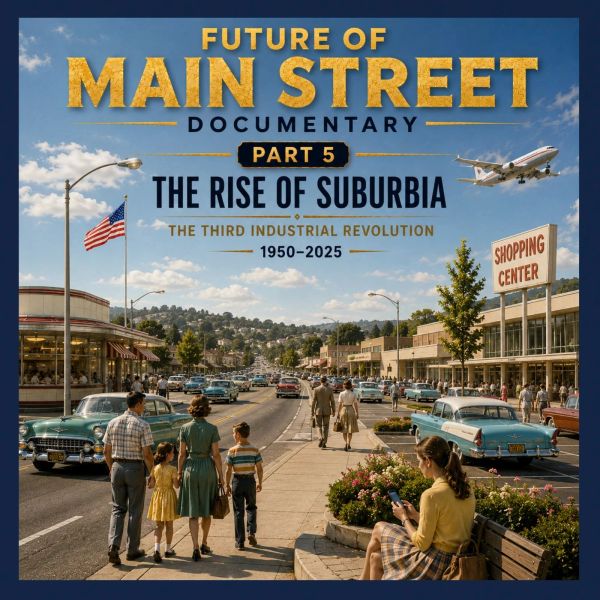
5. RISE OF SUBURBIA
The Rise of Suburbia explores how the Third Industrial Revolution transformed Main Street between 1950 and 2025. Interstate highways created new opportunities for Main Street businesses. Digital technology transformed communication, commerce, and daily life. Communities expanded beyond traditional downtowns as businesses adapted to changing lifestyles.
Restaurants, retail stores, hotels, and service businesses embraced new technology to improve customer experiences. Credit cards, barcode scanners, personal computers, online reservations, e-commerce, and smartphones reshaped daily life.
Main Street’s purpose remained unchanged: connecting people, supporting local businesses, and strengthening communities. This era demonstrated that innovation continually reshapes Main Street while preserving its essential role as the heart of community life.
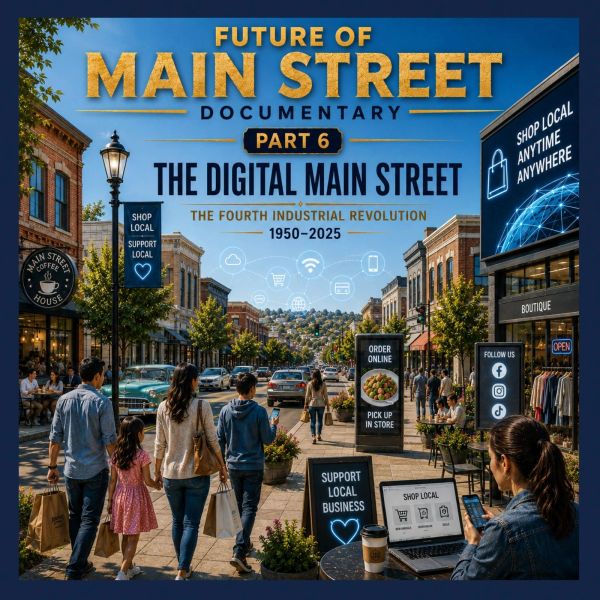
6. THE DIGITAL MAIN STREET
The Digital Main Street explores how the internet transformed local businesses from the 1990s through today. Websites, search engines, online reviews, social media, smartphones, and e-commerce extended Main Street beyond physical storefronts. Customers could discover businesses, compare products, make reservations, and shop from anywhere. These innovations created new growth opportunities.
Restaurants, retailers, hotels, and service providers adopted digital tools to better serve customers. Online ordering, digital payments, cloud software, delivery platforms, and real-time communication expanded access to local products
Digital technology did not replace Main Street. It expanded its reach. Local businesses started serving customers both in person and online. The Digital Main Street demonstrated how innovation continues to strengthen local economies while preserving the personal connections that make every community unique.
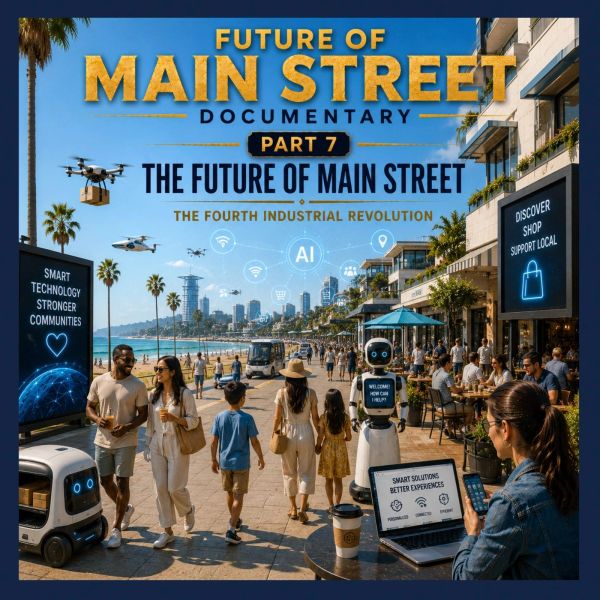
7. THE FUTURE OF MAIN STREET
The Future of Main Street explores how the Fourth Industrial Revolution will transform local communities through artificial intelligence, robotics, automation, immersive experiences, drones, and connected technologies. These innovations will help businesses create more personalized customer experiences, strengthen employee productivity, and build deeper relationships with the communities they serve.
Restaurants, retailers, hotels, healthcare providers, and senior living communities are beginning to adopt intelligent tools that streamline repetitive tasks, allowing employees to focus on meaningful human interaction. Physical locations become connected with digital experiences that extend every visit beyond the front door
The Future of Main Street will be built by communities willing to embrace innovation while preserving their unique identity. The Fourth Industrial Revolution creates new opportunities for businesses to grow, serve, and inspire future generations.
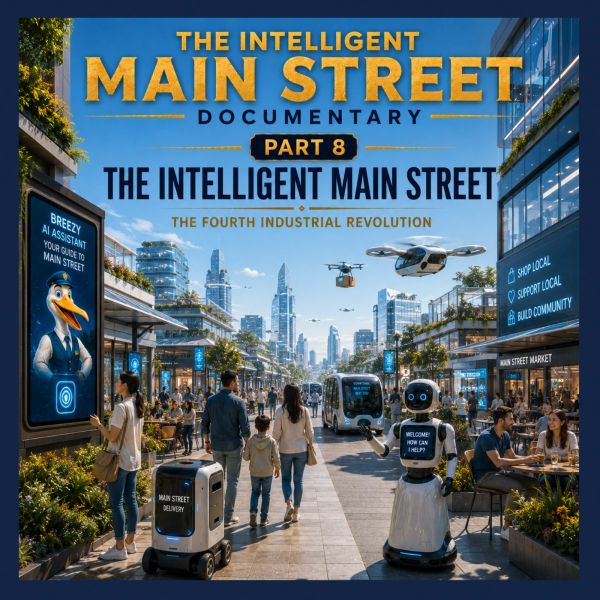
8. THE INTELLEGENT MAIN STREET
The Intelligent Main Street explores a future where artificial intelligence becomes an everyday partner for local businesses, employees, residents, and visitors. Intelligent systems help communities deliver more personalized services, improve accessibility, strengthen public safety, reduce repetitive work, and create better experiences.
Restaurants, retailers, and hotels will work together through connected technology. AI assistants, interactive robots, and smart systems will improve customer service, support employees, and help businesses operate more efficiently.
The Intelligent Main Street is not defined by technology alone. It is defined by how communities use innovation to strengthen relationships, expand opportunity, preserve local identity, and improve quality of life.

San Diego Smart Cities
San Diego Smart Cities connect residents and arriving tourists with Main Street businesses, nature, and history. Follow us on LinkedIn.