

GET TO KNOW LEMON GROVE
San Diego Smart Cities unleashes your connection to the East Village. Our hyper-local mission is aligning the region's history with its future. We're committed to human-centric campaigns that empower employees and connect you with Lemon Grove.
Main Street History is honored to introduce students, residents, and tourists to the community’s journey of innovation through the Second (1870-1914) and Third (1950-2025) Industrial Revolutions. Our campaigns highlight how Lemon Grove embraced massive change and continued to move forward.
- Rise of Cities Online Course
- Rise of Suburbia Online Course
- El Cajon's Fallen Heroes
- Women Trailblazers - 2nd Industrial Revolution
- Women Trailblazers - 3rd Industrial Revolution
- Black Innovators - 2nd Industrial Revolution
- Black Innovators - 3rd Industrial Revolution

RISE OF MAIN STREET COURSE
At San Diego Smart Cities, our mission is to provide innovative solutions for the science and technology industry. We strive to make the world a better place through cutting-edge research and development.
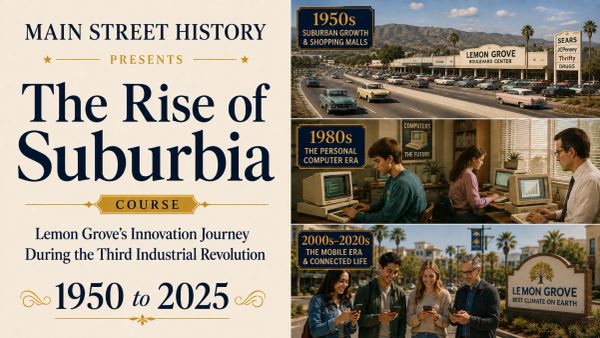
THE RISE OF SUBURBIA COURSE
Our team consists of highly skilled professionals with years of experience in their respective fields. We work together to deliver the best possible results for our clients.

Impacts of Electric Power and Lighting
Impacts of Electric Power and Lighting
Impacts of Electric Power and Lighting
Tech Station One:
Main Street Restaurant
Date(s) of Impact:
Main Street Impact:
Electric power and lighting extended business hours, improved safety, illuminated storefronts, and powered new equipment. The new tech transformed Main Street.
Impacts of Telephone Communication
Impacts of Electric Power and Lighting
Impacts of Electric Power and Lighting
Tech Station One:
Main Street Retail Store
Date(s) of Impact:
Main Street Impact:
Telephone communication changed Main Street businesses. Stores could reach customers and suppliers faster, coordinate orders, share information, and stay connected.
Impacts of Expanded Railroad Networks
Impacts of Electric Power and Lighting
Impacts of Expanded Railroad Networks
Tech Station One:
Main Street Hotel
Date(s) of Impact:
Main Street Impact:
Expanded railroad networks connected Main Street businesses to larger markets and new sources of goods. Faster transportation increased trade, travel, and economic growth.
Impacts of Steel Production
Impacts of Electric Power and Lighting
Impacts of Expanded Railroad Networks
Tech Station One:
Main Street Gas Station
Date(s) of Impact:
Main Street Impact:
Steel production enabled stronger buildings, bridges, railroads, and tools. Main Street communities gained more durable infrastructure and greater access to regional markets.
Impacts of Improved Roads and Bridges
Impacts of Sanitation and Sewer Systems
Impacts of Improved Roads and Bridges
Tech Station One:
Main Street Restaurant
Date(s) of Impact:
Main Street Impact:
Improved roads and bridges made travel between surrounding communities faster and more reliable. Better transportation brought more customers, goods, and business activity into town.
Impacts of Automobiles
Impacts of Sanitation and Sewer Systems
Impacts of Improved Roads and Bridges
Tech Station One:
Main Street Retail Store
Date(s) of Impact:
Main Street Impact:
Automobiles changed the way people traveled to and around Main Street. Greater mobility expanded customer reach, increased commerce, and reshaped where businesses developed.
Impacts of Modern Water Systems
Impacts of Sanitation and Sewer Systems
Impacts of Sanitation and Sewer Systems
Tech Station One:
Main Street Hotel
Date(s) of Impact:
Main Street Impact:
Modern water systems brought cleaner, more reliable water to Main Street homes and businesses. Better sanitation improved public health and supported rapid growth.
Impacts of Sanitation and Sewer Systems
Impacts of Sanitation and Sewer Systems
Impacts of Sanitation and Sewer Systems
Tech Station One:
Main Street Gas Station
Date(s) of Impact:
Main Street Impact:
Sanitation and sewer systems made Main Street cleaner and healthier. Better waste removal reduced disease, improved living conditions, and supported larger communities.
Impacts of Ag Machinery
Impacts of Railcar Refrigeration
Impacts of Railcar Refrigeration
Tech Station One:
Main Street Restaurant
Date(s) of Impact:
Main Street Impact:
Ag machinery increased farm productivity and reduced the labor needed to grow and harvest crops. Higher output strengthened local trade and brought more goods to Main Street markets.
Impacts of Railcar Refrigeration
Impacts of Railcar Refrigeration
Impacts of Railcar Refrigeration
Tech Station One:
Main Street Retail Store
Date(s) of Impact:
Main Street Impact:
Railcar refrigeration allowed fresh food to travel farther without spoiling. Main Street businesses gained access to more products, expanded markets, and more reliable food supplies.
Impacts of Mass Production
Impacts of Railcar Refrigeration
Impacts of Mail-Order Catalogs
Tech Station One:
Main Street Hotel
Date(s) of Impact:
Main Street Impact:
Mass production made everyday goods faster and cheaper to produce. Main Street stores gained access to more products, lower prices, and a growing consumer market.
Impacts of Mail-Order Catalogs
Impacts of Railcar Refrigeration
Impacts of Mail-Order Catalogs
Tech Station One:
Main Street Gas Station
Date(s) of Impact:
Main Street Impact:
Mail-order catalogs gave Main Street residents access to thousands of products beyond what local stores offered. Rural families gained more choices, competitive prices, and direct delivery.
The Impacts of New Home Appliances
The Impacts of New Home Appliances
The Impacts of New Home Appliances
Tech Station One:
Main Street Restaurant
Date(s) of Impact:
Main Street Impact:
Electric power and lighting extended business hours, improved safety, illuminated storefronts, and powered new equipment. The new tech transformed Main Street.
The Impacts of Interstate Highways
The Impacts of New Home Appliances
The Impacts of New Home Appliances
Tech Station One:
Main Street Retail Store
Date(s) of Impact:
Main Street Impact:
Interstate highways connected cities for faster regional travel. They expanded access to jobs, shopping, and services, while drawing customers away from traditional Main Street.
The Impacts of Air Conditioning
The Impacts of New Home Appliances
The Impacts of Air Conditioning
Tech Station One:
Main Street Hotel
Date(s) of Impact:
Main Street Impact:
Air conditioning made Main Street stores, restaurants, and offices more comfortable during hot weather. Cooler indoor spaces encouraged longer visits and supported year-round business activity.
The Impacts of Mass Media (TV)
The Impacts of New Home Appliances
The Impacts of Air Conditioning
Tech Station One:
Main Street Gas Station
Date(s) of Impact:
Main Street Impact:
Television brought national advertising, entertainment, and culture into local homes. Main Street businesses faced greater competition as national brands shaped consumer tastes.
The Impacts of Credit Cards
The Impacts of Cellular Phones
The Impacts of Shopping Malls
Tech Station One:
Main Street Restaurant
Date(s) of Impact:
Main Street Impact:
Electric power and lighting extended business hours, improved safety, illuminated storefronts, and powered new equipment. The new tech transformed Main Street.
The Impacts of Shopping Malls
The Impacts of Cellular Phones
The Impacts of Shopping Malls
Tech Station One:
Main Street Retail Store
Date(s) of Impact:
Main Street Impact:
Shopping malls shifted shopping away from traditional Main Street districts. Customers gained access to many stores, restaurants, and services in one convenient location.
The Impacts of Home Computers
The Impacts of Cellular Phones
The Impacts of Cellular Phones
Tech Station One:
Main Street Hotel
Date(s) of Impact:
Main Street Impact:
Home computers brought digital technology into everyday life. Main Street businesses began using computers for accounting, inventory, communication, and daily operations.
The Impacts of Cellular Phones
The Impacts of Cellular Phones
The Impacts of Cellular Phones
Tech Station One:
Main Street Gas Station
Date(s) of Impact:
Main Street Impact:
Cell phones changed how people communicated on Main Street. Customers could contact businesses from anywhere, and employees stayed connected outside traditional landline locations.
The Impacts of the Internet
The Impacts of Cloud Computing
The Impacts of the Internet
Tech Station One:
Main Street Restaurant
Date(s) of Impact:
Main Street Impact:
The internet connected Main Street businesses to customers far beyond their local community. Websites, email, and online search changed how people shopped and communicated.
The Impacts of E-Commerce
The Impacts of Cloud Computing
The Impacts of the Internet
Tech Station One:
Main Street Retail Store
Date(s) of Impact:
Main Street Impact:
E-commerce changed Main Street by moving more shopping online. Local businesses gained new ways to sell products, reach customers, and compete beyond storefronts.
The Impacts of Smartphones
The Impacts of Cloud Computing
The Impacts of Cloud Computing
Tech Station One:
Main Street Hotel
Date(s) of Impact:
Main Street Impact:
Smartphones put the internet, communication, shopping, and navigation in people’s hands. Main Street businesses gained new ways to connect with customers throughout the day.
The Impacts of Cloud Computing
The Impacts of Cloud Computing
The Impacts of Cloud Computing
Tech Station One:
Main Street Gas Station
Date(s) of Impact:
Main Street Impact:
Cloud computing gave Main Street businesses access to software and data from anywhere. It reduced technology costs and made daily operations easier to manage.
Fallen Heroes Coming Soon
Fallen Heroes Coming Soon
Fallen Heroes Coming Soon
Tech Station One:
Main Street Gas Station
War:
Vietnam War
Fallen Heroes Coming Soon
Fallen Heroes Coming Soon
Fallen Heroes Coming Soon
Tech Station One:
Main Street Gas Station
War:
Vietnam War
Fallen Heroes Coming Soon
Fallen Heroes Coming Soon
Fallen Heroes Coming Soon
Tech Station One:
Main Street Gas Station
War:
Vietnam War
Fallen Heroes Coming Soon
Fallen Heroes Coming Soon
Fallen Heroes Coming Soon
Tech Station One:
Main Street Gas Station
War:
Vietnam War
Fallen Heroes Coming Soon
Fallen Heroes Coming Soon
Fallen Heroes Coming Soon
Tech Station One:
Main Street Gas Station
War:
Vietnam War
Fallen Heroes Coming Soon
Fallen Heroes Coming Soon
Fallen Heroes Coming Soon
Tech Station One:
Main Street Gas Station
War:
Vietnam War
Fallen Heroes Coming Soon
Fallen Heroes Coming Soon
Fallen Heroes Coming Soon
Tech Station One:
Main Street Gas Station
War:
Vietnam War
Fallen Heroes Coming Soon
Fallen Heroes Coming Soon
Fallen Heroes Coming Soon
Tech Station One:
Main Street Gas Station
War:
Vietnam War
Fallen Heroes Coming Soon
Fallen Heroes Coming Soon
Fallen Heroes Coming Soon
Tech Station One:
Main Street Gas Station
War:
Vietnam War
Fallen Heroes Coming Soon
Fallen Heroes Coming Soon
Fallen Heroes Coming Soon
Tech Station One:
Main Street Gas Station
War:
Vietnam War
Fallen Heroes Coming Soon
Fallen Heroes Coming Soon
Fallen Heroes Coming Soon
Tech Station One:
Main Street Gas Station
War:
Vietnam War
Fallen Heroes Coming Soon
Fallen Heroes Coming Soon
Fallen Heroes Coming Soon
Tech Station One:
Main Street Gas Station
War:
Vietnam War
Women Trailblazers Coming Soon
Women Trailblazers Coming Soon
Women Trailblazers Coming Soon
Tech Station One:
Main Street Restaurant
Years of Impact:
Trailblazer Impact:
Celebrate San Diego’s women trailblazers. Discover the women who broke barriers, built businesses, and shaped the region during the 2nd and 3rd Industrial Revolutions.
Women Trailblazers Coming Soon
Women Trailblazers Coming Soon
Women Trailblazers Coming Soon
Tech Station One:
Main Street Retail Store
Years of Impact:
Trailblazer Impact:
Celebrate San Diego’s women trailblazers. Discover the women who broke barriers, built businesses, and shaped the region during the 2nd and 3rd Industrial Revolutions.
Women Trailblazers Coming Soon
Women Trailblazers Coming Soon
Women Trailblazers Coming Soon
Tech Station One:
Main Street Hotel
Years of Impact:
Trailblazer Impact:
Celebrate San Diego’s women trailblazers. Discover the women who broke barriers, built businesses, and shaped the region during the 2nd and 3rd Industrial Revolutions.
Women Trailblazers Coming Soon
Women Trailblazers Coming Soon
Women Trailblazers Coming Soon
Tech Station One:
Main Street Gas Station
Years of Impact:
Trailblazer Impact:
Celebrate San Diego’s women trailblazers. Discover the women who broke barriers, built businesses, and shaped the region during the 2nd and 3rd Industrial Revolutions.
Women Trailblazers Coming Soon
Women Trailblazers Coming Soon
Women Trailblazers Coming Soon
Tech Station One:
Main Street Restaurant
Years of Impact:
Trailblazer Impact:
Celebrate San Diego’s women trailblazers. Discover the women who broke barriers, built businesses, and shaped the region during the 2nd and 3rd Industrial Revolutions.
Women Trailblazers Coming Soon
Women Trailblazers Coming Soon
Women Trailblazers Coming Soon
Tech Station One:
Main Street Retail Store
Years of Impact:
Trailblazer Impact:
Celebrate San Diego’s women trailblazers. Discover the women who broke barriers, built businesses, and shaped the region during the 2nd and 3rd Industrial Revolutions.
Women Trailblazers Coming Soon
Women Trailblazers Coming Soon
Women Trailblazers Coming Soon
Tech Station One:
Main Street Hotel
Years of Impact:
Trailblazer Impact:
Celebrate San Diego’s women trailblazers. Discover the women who broke barriers, built businesses, and shaped the region during the 2nd and 3rd Industrial Revolutions.
Women Trailblazers Coming Soon
Women Trailblazers Coming Soon
Women Trailblazers Coming Soon
Tech Station One:
Main Street Gas Station
Years of Impact:
Trailblazer Impact:
Celebrate San Diego’s women trailblazers. Discover the women who broke barriers, built businesses, and shaped the region during the 2nd and 3rd Industrial Revolutions.
Women Trailblazers Coming Soon
Women Trailblazers Coming Soon
Women Trailblazers Coming Soon
Tech Station One:
Main Street Restaurant
Years of Impact:
Trailblazer Impact:
Celebrate San Diego’s women trailblazers. Discover the women who broke barriers, built businesses, and shaped the region during the 2nd and 3rd Industrial Revolutions.
Women Trailblazers Coming Soon
Women Trailblazers Coming Soon
Women Trailblazers Coming Soon
Tech Station One:
Main Street Retail Store
Years of Impact:
Trailblazer Impact:
Celebrate San Diego’s women trailblazers. Discover the women who broke barriers, built businesses, and shaped the region during the 2nd and 3rd Industrial Revolutions.
Women Trailblazers Coming Soon
Women Trailblazers Coming Soon
Women Trailblazers Coming Soon
Tech Station One:
Main Street Hotel
Years of Impact:
Trailblazer Impact:
Celebrate San Diego’s women trailblazers. Discover the women who broke barriers, built businesses, and shaped the region during the 2nd and 3rd Industrial Revolutions.
Women Trailblazers Coming Soon
Women Trailblazers Coming Soon
Women Trailblazers Coming Soon
Tech Station One:
Main Street Gas Station
Years of Impact:
Trailblazer Impact:
Celebrate San Diego’s women trailblazers. Discover the women who broke barriers, built businesses, and shaped the region during the 2nd and 3rd Industrial Revolutions.
Women Trailblazers Coming Soon
Women Trailblazers Coming Soon
Women Trailblazers Coming Soon
Tech Station One:
Main Street Restaurant
Years of Impact:
Trailblazer Impact:
Celebrate San Diego’s women trailblazers. Discover the women who broke barriers, built businesses, and shaped the region during the 2nd and 3rd Industrial Revolutions.
Women Trailblazers Coming Soon
Women Trailblazers Coming Soon
Women Trailblazers Coming Soon
Tech Station One:
Main Street Retail Store
Years of Impact:
Trailblazer Impact:
Celebrate San Diego’s women trailblazers. Discover the women who broke barriers, built businesses, and shaped the region during the 2nd and 3rd Industrial Revolutions.
Women Trailblazers Coming Soon
Women Trailblazers Coming Soon
Women Trailblazers Coming Soon
Tech Station One:
Main Street Hotel
Years of Impact:
Trailblazer Impact:
Celebrate San Diego’s women trailblazers. Discover the women who broke barriers, built businesses, and shaped the region during the 2nd and 3rd Industrial Revolutions.
Women Trailblazers Coming Soon
Women Trailblazers Coming Soon
Women Trailblazers Coming Soon
Tech Station One:
Main Street Gas Station
Years of Impact:
Trailblazer Impact:
Celebrate San Diego’s women trailblazers. Discover the women who broke barriers, built businesses, and shaped the region during the 2nd and 3rd Industrial Revolutions.
Women Trailblazers Coming Soon
Women Trailblazers Coming Soon
Women Trailblazers Coming Soon
Tech Station One:
Main Street Restaurant
Years of Impact:
Trailblazer Impact:
Celebrate San Diego’s women trailblazers. Discover the women who broke barriers, built businesses, and shaped the region during the 2nd and 3rd Industrial Revolutions.
Women Trailblazers Coming Soon
Women Trailblazers Coming Soon
Women Trailblazers Coming Soon
Tech Station One:
Main Street Retail Store
Years of Impact:
Trailblazer Impact:
Celebrate San Diego’s women trailblazers. Discover the women who broke barriers, built businesses, and shaped the region during the 2nd and 3rd Industrial Revolutions.
Women Trailblazers Coming Soon
Women Trailblazers Coming Soon
Women Trailblazers Coming Soon
Tech Station One:
Main Street Hotel
Years of Impact:
Trailblazer Impact:
Celebrate San Diego’s women trailblazers. Discover the women who broke barriers, built businesses, and shaped the region during the 2nd and 3rd Industrial Revolutions.
Women Trailblazers Coming Soon
Women Trailblazers Coming Soon
Women Trailblazers Coming Soon
Tech Station One:
Main Street Gas Station
Years of Impact:
Trailblazer Impact:
Celebrate San Diego’s women trailblazers. Discover the women who broke barriers, built businesses, and shaped the region during the 2nd and 3rd Industrial Revolutions.
Women Trailblazers Coming Soon
Women Trailblazers Coming Soon
Women Trailblazers Coming Soon
Tech Station One:
Main Street Restaurant
Years of Impact:
Trailblazer Impact:
Celebrate San Diego’s women trailblazers. Discover the women who broke barriers, built businesses, and shaped the region during the 2nd and 3rd Industrial Revolutions.
Women Trailblazers Coming Soon
Women Trailblazers Coming Soon
Women Trailblazers Coming Soon
Tech Station One:
Main Street Retail Store
Years of Impact:
Trailblazer Impact:
Celebrate San Diego’s women trailblazers. Discover the women who broke barriers, built businesses, and shaped the region during the 2nd and 3rd Industrial Revolutions.
Women Trailblazers Coming Soon
Women Trailblazers Coming Soon
Women Trailblazers Coming Soon
Tech Station One:
Main Street Hotel
Years of Impact:
Trailblazer Impact:
Celebrate San Diego’s women trailblazers. Discover the women who broke barriers, built businesses, and shaped the region during the 2nd and 3rd Industrial Revolutions.
Women Trailblazers Coming Soon
Women Trailblazers Coming Soon
Women Trailblazers Coming Soon
Tech Station One:
Main Street Gas Station
Years of Impact:
Trailblazer Impact:
Celebrate San Diego’s women trailblazers. Discover the women who broke barriers, built businesses, and shaped the region during the 2nd and 3rd Industrial Revolutions.
Black Innovator: Fred Coleman
Black Innovator: Margaret Robinson
Black Innovator: Albert Robinson
Tech Station One:
Main Street Restaurant
Years of Impact:
1870s–1880s
Innovator Impact:
Fred Coleman discovered gold near Julian and later built and operated toll roads connecting El Cajon with Coleman City, supporting regional travel, commerce, and development
Black Innovator: Albert Robinson
Black Innovator: Margaret Robinson
Black Innovator: Albert Robinson
Tech Station One:
Main Street Retail
Years of Impact:
1887–1915
Innovator Impact:
Albert and Margaret Robinson built and operated Hotel Robinson in Julian beginning in 1887. Their Black-owned hospitality business served travelers and supported the region’s growing economy.
Black Innovator: Margaret Robinson
Black Innovator: Margaret Robinson
Black Innovator: Margaret Robinson
Tech Station One:
Main Street Hotel
Years of Impact:
1887–1921
Innovator Impact:
Margaret Robinson co-owned and operated Hotel Robinson in Julian, continuing the business after Albert’s death and demonstrating Black women’s entrepreneurship during the era.
Black Innovators: Isaac Atkinson
Black Innovator: Margaret Robinson
Black Innovator: Margaret Robinson
Tech Station One:
Main Street Gas Station
Years of Impact:
1880s–1890s
Innovator Impact:
Isaac Atkinson operated a bakery in Julian before establishing the Colonizer, San Diego’s first Black-owned newspaper, demonstrating entrepreneurship and community leadership.
Black Innovators Coming Soon
Black Innovators Coming Soon
Black Innovators Coming Soon
Tech Station One:
Main Street Restaurant
Years of Impact:
Innovator Impact:
Celebrate San Diego’s Black Innovators. Learn about the people whose ideas and leadership helped move the region forward during the Second and Third Industrial Revolutions.
Black Innovators Coming Soon
Black Innovators Coming Soon
Black Innovators Coming Soon
Tech Station One:
Main Street Retail
Years of Impact:
Innovator Impact:
Celebrate San Diego’s Black Innovators. Learn about the people whose ideas and leadership helped move the region forward during the Second and Third Industrial Revolutions.
Black Innovators Coming Soon
Black Innovators Coming Soon
Black Innovators Coming Soon
Tech Station One:
Main Street Hotel
Years of Impact:
Innovator Impact:
Celebrate San Diego’s Black Innovators. Learn about the people whose ideas and leadership helped move the region forward during the Second and Third Industrial Revolutions.
Black Innovators Coming Soon
Black Innovators Coming Soon
Black Innovators Coming Soon
Tech Station One:
Main Street Gas Station
Years of Impact:
Innovator Impact:
Celebrate San Diego’s Black Innovators. Learn about the people whose ideas and leadership helped move the region forward during the Second and Third Industrial Revolutions.
Black Innovators Coming Soon
Black Innovators Coming Soon
Black Innovators Coming Soon
Tech Station One:
Main Street Restaurant
Years of Impact:
Innovator Impact:
Celebrate San Diego’s Black Innovators. Learn about the people whose ideas and leadership helped move the region forward during the Second and Third Industrial Revolutions.
Black Innovators Coming Soon
Black Innovators Coming Soon
Black Innovators Coming Soon
Tech Station One:
Main Street Retail
Years of Impact:
Innovator Impact:
Celebrate San Diego’s Black Innovators. Learn about the people whose ideas and leadership helped move the region forward during the Second and Third Industrial Revolutions.
Black Innovators Coming Soon
Black Innovators Coming Soon
Black Innovators Coming Soon
Tech Station One:
Main Street Hotel
Years of Impact:
Innovator Impact:
Celebrate San Diego’s Black Innovators. Learn about the people whose ideas and leadership helped move the region forward during the Second and Third Industrial Revolutions.
Black Innovators Coming Soon
Black Innovators Coming Soon
Black Innovators Coming Soon
Tech Station One:
Main Street Gas Station
Years of Impact:
Innovator Impact:
Celebrate San Diego’s Black Innovators. Learn about the people whose ideas and leadership helped move the region forward during the Second and Third Industrial Revolutions.
Black Innovators Coming Soon
Black Innovators Coming Soon
Black Innovators Coming Soon
Tech Station One:
Main Street Restaurant
Years of Impact:
Innovator Impact:
Celebrate San Diego’s Black Innovators. Learn about the people whose ideas and leadership helped move the region forward during the Second and Third Industrial Revolutions.
Black Innovators Coming Soon
Black Innovators Coming Soon
Black Innovators Coming Soon
Tech Station One:
Main Street Retail
Years of Impact:
Innovator Impact:
Celebrate San Diego’s Black Innovators. Learn about the people whose ideas and leadership helped move the region forward during the Second and Third Industrial Revolutions.
Black Innovators Coming Soon
Black Innovators Coming Soon
Black Innovators Coming Soon
Tech Station One:
Main Street Hotel
Years of Impact:
Innovator Impact:
Celebrate San Diego’s Black Innovators. Learn about the people whose ideas and leadership helped move the region forward during the Second and Third Industrial Revolutions.
Black Innovators Coming Soon
Black Innovators Coming Soon
Black Innovators Coming Soon
Tech Station One:
Main Street Gas Station
Years of Impact:
Innovator Impact:
Celebrate San Diego’s Black Innovators. Learn about the people whose ideas and leadership helped move the region forward during the Second and Third Industrial Revolutions.

San Diego Smart Cities
San Diego Smart Cities connect residents and arriving tourists with Main Street businesses, nature, and history. Follow us on LinkedIn.